Sunday, April 5, 2015

Wet Year Woes

My adopted home state of California, along with everyone else West of the Mississippi, is in drought.  In fact, given the lack of rain over the past 13 years, the situation may even qualify as a megadrought.  Nice term!  Scary-sounding, and, if there's any truth in the forecast of a three-decade dry spell, genuinely scary.

And yet, my memory tells me that at least two or three of those years must have been pretty wet.  Since completing my first 210-odd miles on the John Muir trail at 19, I figure by now I must have walked at least 2000 miles in the Sierra Nevada (I'm 48) -- and quite a few of those miles were cold, snowy, wet-boot miles.

Yes, I distinctly remember an early-oughts cross-country hike over Graveyard pass, where I was surprised to see that someone else had already stuck a few walking sticks in the snow up there before their footprints got snowed over.  More recently, I've slid and stumbled and butt-glissaded in The White Stuff in places like Yosemite and Emigrant Wilderness, with witnesses!


Sometimes, lovely witnesses:


My wet tale of woe, though, was a solo late June hike in the northern Yosemite wilderness.  Experienced people will tell you, as I now know, that June is still pretty early for backpacking up high -- especially in a wet year.  But I had it in my head that I was going to be the first guy to fish a few of my favorite lakes up there at the 9,000 foot level, and I had lovely images of stripping wooly buggers in front of the noses of hungry trout along the edge of a lake still in the process of ice-out.  

Along this 20-24 mile schlep into my favorite lake, I was to experience five increasingly convincing, disturbing, and finally disastrous signs that it was not only a very wet year but -- ironically enough -- too wet for wetting a line effectively.

Sign #1

When the trail turned into a U-shaped track through meadowy areas, that track was in fact a slow-moving, inches-deep stream of clear, cold water.  To save my boots, I switched out to Tevas until my toes got numb. 

Sign #2

Arriving after about 10 miles at lovely, trouty lake at 6500 feet, I found that the lake's shore had extended WELL back into the trees.  The rocks that I had cast from in previous years were either submerged, or were little islands out in the lake, and there was a good 2-3 feet of cold-ass water lying between the pines where I might have expected to camp.  Casting a fly in those trees was not going to work well (assuming there were even any trout rooting among the pine cones), so I kept moving along.

Sign #3

The main waterway in this canyon, the same one feeding the aforementioned flooded lake, was, as I found upon climbing up the granite slopes, not the usual collection of fishable pools connected by quaint waterfalls -- it was a ROARING TORRENT.  I remember standing by the white, leaping water and having two thoughts: 
  1. "This sounds like a goddam jet engine at full blast."
  2. "This could be dangerous if I slipped and got my sorry ass swept in there."  

Sign #4

My final hope for that first day was to fish a second-favorite lake around 8,000 feet -- but that was not to be either, for a whole new Cause of Unfishability.  In this case, the flooding stream, normally crossed on stepping stones or waded at a cold but shallow ford, completely locked me away from the lake.  Believe me, I covered ground looking for a crossing of some kind.  But the prospect of wading with a backpack in four or five feet of firmly flowing, icy water didn't have great appeal.  I pitched a camp away from the stream and put all my hopes on the #1 lake, still 8-9 miles and 1000 vertical feet away.

Sign #5

If you've ever walked a hard day in the Sierras, filled with anticipation of arriving at a sweet camp and throwing your backpack down at last, you'll know exactly how I felt the following day when I rounded the last few hills blocking my view of the lake.  I was excited and walking fast through about a half-foot of damp snow. There was snow on the trees too, all of which created a fairly blinding effect in the midday Sierra sunlight, but I tramped along with my lovely image of the ice-ringed lake brimming with big, hungry trout.  Finally arriving at an overlook to the lake, what did I see?  WHITE STUFF.  A big, long field of it right where the lake should have been, without a single break of visible, liquid water surface.  The lake was still ice-covered, in late June!

Those were some wet year woes.  I got to walk through some unique conditions, and I sure got a workout -- but in one the wettest multi-day California hikes in my personal history, I did not get to wet a line.  I'm sure you appreciate that I'm not making this up, because you can't make this stuff up.

For last summer's backpacking, the bigger issues were shallow, warm water, and smoke from wildfires.  One night, after a long, hazy day, I woke up in the wee hours with genuine concern for the breathability of the air.  Smoke from various fires in the general area had created a dense, white fog around my camp.  The next day -- a much clearer day, thankfully -- my tent smelled like it had been held over a campfire. A group of kids hiking down from higher up were very relieved to hear from me that the trailhead was not actively aflame.  

I'm wondering how things will look this year.  Will the plumbed and piped lower Sacramento be running high and clear during the shad run?  Will the aqueducts in Glenn county spill the usual flood of water into the furrows between the almond trees, or into the big shallow lakes where a fat percentage of American rice is grown?  Is "megadrought" a scary enough prospect that Californians might adjust their agricultural use of water, in addition to asking citizens to wash their dishes more efficiently?  

As a guy whose wilderness activities are partly motivated by a desire to create distance from the general disappointment created by fellow humans, I'd tend to think: probably not. However, in an effort to see the glass as half full, I'll reflect that there will probably be no problem fishing a certain lake system this year, even in late June.  


Sunday, June 8, 2014

Tarpology

Though it happened twenty years ago, the scene is still vivid in my mind: I'm backpacking in the Japan Alps with my English pal Phil, and we're setting up a tent in a nasty cold wind.  As I try to tie down a tarp line to a stake, gusts keep blowing the corner of the tarp into my face, and I keep messing up the knot, untying it, and trying again.  Phil, watching this, eventually comes over, grabs the line out of my hands, and makes the unforgettably English utterance:

"OH, you're SO unSKILLful!!!!"

I offer this anecdote as a disclaimer.  I am not a certifed, trained tarpologist, and I will not pretend, in this blog post, to inform you about tarping solutions as much as tarping problems.  With the latter, I am very familiar; with the former, I adopt an approach which is, shall we say, intuitive?  (Unskillful).  Tarping is on my mind today because I'm just a few weeks away from the kind of trip where you could end up setting and re-setting a couple of different tarps a few times a day.  The kind of trip where the wind changes like this:


That billowing setup is a pretty clear example of my intuitive tarping methodology:

  1. Find two fairly tall trees that are not further apart than 3/4 of your longest piece of nylon cord.
  2. String a "backbone" cord from one tree to the next and super-tighten it with a trucker hitch.
  3. Laying the square tarp along the line in diamond orientation, hitch the tree corners the same way.
  4. Tie down the remaining two corners to ground stakes or logs or stuff on the ground, and tighten those down as much as possible, again with trucker hitches.
One important thing about this method is the location. In addition to the properly-distanced trees, you'll need clear space in the middle, and flat space if you're intending to tarp over a tent (which is a very good idea in Alaska, where it really really pours and blows, often).  I'm reminded of what fly fishers sometimes say: you can either change your line and rig, or go find some water where your line and rig will work.  Tarpologically, I go find sites where my rig will work.

"Rigs" I should say, because in bad rain I usually set up a tarp over my kitchen/dining room as well as my tent or hammock.  In low-volume kayak packing, this means carrying one large dedicated tarp, and then double-tasking the small integrated tarp that comes with the hammock (I'm referring to a Hennessy wilderness hammock, which is indispensable for swampy or jungly terrain and a perfect backup for a tent).   Here's the small tarp deployed for the dinner hour:


Tip: a few ounces of single-malt scotch can dramatically increase the comfort of almost any tarp scenario.

I'm sure a Google search would turn up plenty of improvements and better ways to set up these tarps. After posting this blog, I may even have the motivation to do that search and learn some new tricks! Even an unskillful dog can learn a new trick, Phil. The most "technical" tarping I have done is probably my Baja-trip sun tarping, which involves two extendable poles that themselves must be staked in the sand and tied down tight:


When it's hot, you extend the poles up for ventilation; when the Norte is blowing, they come way down:


And with that, I think I have exhausted my material on tarpology.  Though I am necessarily a low-level gearhead simply because it comes with the territory of kayaking, fly-fishing, and wilderness camping, I really don't obsess on gear or methods.  When a setup works, I'll usually forget about it and go fishing. 


Friday, February 8, 2013

Some Good Years Left

The way I have been stealing fishing hours in the interstices of my overworked, silicon-valley-slave lifestyle of the past year or so, I have always felt like I deserved every damn little bit of goodness and happiness coming from fishing, and therefore haven't noticed something important: it has been GOOD and better than normal, better than before.

This came home to me a moment ago when I was reading back to blogs from a few years ago, when I camped on a delta levee and had a ball in general -- but only picked up a few two-pounders for my troubles.  What?  Well, generally, that's the delta: if you're not in the right place (in a massive quasi-wilderness of waterways) at the right time (in a swell of tidal currents that changes speed and even directions, daily) then you're out of luck.  Sometimes you hit it, often you don't.  Sure, I smacked the hell out of small stripers on the San Luis forebay with topwater all through September -- you expect that.

But check it out, on the big old delta, even with my lil kayak program, which limits me to a 10-15 mile range instead of the zipping and zooming 50 miles or more claimed by motorboats, I have been catching good fish every damn trip since they started in October.  

October:


November:


December (OK, I took a break in December, but this still looks like good luck, right?):


January, in cold-ass, turbid water:


And last week, one of a dozen-fish FEBRUARY day!!!


Yes, I have been taking this for granted, along with radically wonderful Baja fishing over Christmas  break, and Thanksgiving ceviche in Costa Rica . . . what an ungrateful pig I am!  I should have been thanking my lucky stars while scarfing down a "Four Fish Feast" on New Year's Eve (sierra-grouper-snook-bonito), and the same for the day I fried up most of that big vermillion rockfish . . . but in flashes, I guess I actually was :)

Reminded of the reminding power of this blog a moment ago, though, I wanted very much to make sure to remind myself: though I'm aging and achey and overworked and disgruntled, I have been having it pretty damn good. So I should shut up --


Monday, January 21, 2013

Must Love Wild Dogs

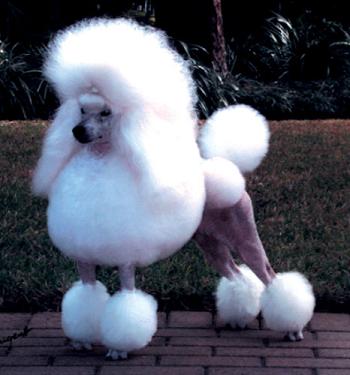
There was great power in a wolf, even in a coyote.  You have made him into a freak -- a toy poodle, a Pekingese, a lapdog.  

    -- John Fire Lame Deer

I'll need to tread lightly here, as I come from a dog-loving family.  Some of my fiercest sisters love dogs to distraction.  One of them passionately advocates for pit bulls, while the other takes in any well-behaved mutt with a big heart (which you might think would incline her fondly toward me, but is not always the case).  My mother continues, at 70-something, to care for the latest in a string of cairn terriers of varying degrees of likability.  My maternal grandmother and grandfather are infamous for naming all of their poodles "Twiggy."  Twiggy Two, Twiggy Three, Twiggies four, five . . . how high did the Twiggies go, anyway?  I lost count long before we lost both of the grandparents.

Needless to say, those dear old Twiggies are exactly what Lame Deer refers to above.  How did we get to a point where a wolf was transformed into a poodle, and not only did humanity fail to be appalled by this turn of events, but was made strangely happy.  "Here's my best friend at last!" we said, instead of "What in tarnation have we created here?


Let's put our domesticated dog and a wild dog side by side, in very literal terms.  This is exactly what happened when, a couple months ago, our local (and very lovable) golden doodle (a perfect name for my current purposes, I must say) came in direct contact with coyotes.  The doodle belongs to my landlord and landlady, while the coyotes belong just to the general neighborhood of hills and houses.  Every once in a while they start to raise an unholy chaos of cries, barks and yips in the middle of a sunny day, and then, some minutes later, your human ears start to hear the ambulance siren on Old San Jose Road that set them off.  The coyotes are loud, and they're close.  It is my belief that they live near the top of a little arroyo that I could hit with a stone thrown from the landlord's yard.

And, Rosie, golden doodle-cum-Escape Artist, broke through the fence one day and made her way down there.  The result was a few hundred dollars worth of veteranarian stitches, a few shaved patches in wiry white fur, and a somewhat chastened domesticated creature.  Much to their credit, the doodle's owners didn't go crazy with blood lust for coyotes.  Unlike certain ranchers described by Lame Deer, they eschewed poison or booby-trapped carrion, and viewed the problem in terms of supply (domesticated dogs encroaching on coyotes) rather than a problem of demand (coyotes creeping up and trying to eat us all in our backyards).

Just for fun, let's take a minute to imagine this particular encroachment from a coyote's eye-view . . .  and I don't mean that we should try to morph our minds into the coyote's, but rather that we should try to imagine what it would be like if some human creature, domesticated by who-knows-which unwise alien race, were to suddenly come at us out of left field . . .

That's right, you're sitting at home watching TV with your kids after a  well-earned dinner, when -- yikes!! -- suddenly, right through the front door, sweeps an oversized, crazy-looking dude with, say, chartreuse-colored hair and, say, hot pink skin on comically long and ill-proportioned limbs . . . I mean, this guy just does not look natural; there's something really really off about him . . . he's got big bugged-out eyes and a clumsy way of standing just an arm's reach from you as he shouts right at you and your kids, in some almost-understandable but completely ridiculous quasi-language, apparently very upset and aggressive about something you can't make out.

"BRAH RAH RARY RAH RAH BRAH WILLY RILLY ROO ROO!!!!!!!!"

The guy is making no fucking sense, and he is completely ruining your relaxing evening.  More than that, he appears to be a vague (if bizarre) threat to your offspring's safety.  So, after trying to talk to the thing and give it obvious verbal cues to leave, you swat out at it in frustration.  And lo!  a weak, feeble blow from you knocks it right over, and it runs off with a bunch of high-pitched, pathetic crying.  "I'll be damned," you think, and settle back down into the couch.

Coyotes confronting a white-furred, long-limbed "dog" barking into their den might see it something like that, and might just give the thing a gentle bite to send it on its way.

I'm exceedingly fond of Rosie the doodle, so don't tell her that I would like very much to make friends out of the coyotes.  It ain't gonna happen, I know.  Those guys down in the arroyo are living on the lam, and no doubt they have made a way of life out of studiously avoiding humans even while living in our midst.  But I sense that, in a perfect world, like one in which I could live permanently on the shores of Mag Bay most of the year, I might just be able to make quasi-friends and semi-pets out of some wild coyotes.  I think they'd accept bowls of water and fish carcasses regularly, and hopefully they would conclude that it were best not to try and eat up the strange human creature apparently providing them.  Dogs have proven to be smart that way.


If that happened, I guess the coyotes would just end up being mildly domesticated.  But they'd still be coyotes!  And I think that's what I'm really wanting here: a little less domestication, and a little more wildness, in whatever creature I pick for my best friend.

That's where you have fooled yourselves.  You have altered, declawed, and malformed not only your winged and four-legged cousins; you have done it to yourselves.


Sunday, November 18, 2012

The Lazy Way

I never mastered (never even attempted) the truly lazy turista vacation where you sit on a beach for a number of days relaxing and reading a shitty novel.  For me, a luxury vacation is when I´m sleeping in hotels instead of pitching a tent in grizzly country or swinging a hammock between two trees. 

And that is the kind of vacation I´m on this minute!  And I´m liking it.  Sitting in my nice-ish hotel room in San Jose Costa Rica, clicking between Premier League and Seria A football matches or alternately gazing out my three arched windows at the ring of mountains around the city, I congratulate myself on being good and lazy. 

Of course, some activity has to be woven into the program.  The model for a Lazy Vacation is the trips I took to Argentina, which involved a small amount of camping, but often just involved a long hard day of wading and hiking, and then a long sweet evening of pigging out alone in a hotel room watching soccer on TV.  Maybe you think that is boring -- but what can I say?  This is how I´m made, this is what I like. 

For a time, I contemplated "popping into Nicaragua" in the middle of this eight-day trip.  Why the parentheses?  Because I "popped" in there last Christmas, and came away with two types of memories: 1, the bliss of paddling and fishing on Lake Nicaragua; and 2, strong memories of waiting in long, hostile lines at the border, sweating profusely, hauling around my kayak bag with no help from dour locals . . . bad memories.  The kind of stuff I´ll do in order to win the reward of a couple of weeks of good fishing.

But for three or four days?  Not sure about that.  In fact, I doubt it enough to have reserved four days at a relatively schwanky hotel on Cano Negro, the lake source of the Rio Frio -- all on the Costa Rican side of the border.  I have a bad feeling the fishing won´t be much, largely due to emails from a local guide who happened to be honest (rare in guides) about conditions in November (turbid, cold, and bad). 

But at least I´ll get out into the bird-loud, croc-lurking jungle waterways and give it a try.  The lake can be paddled, and one can put together a roughly twenty mile day paddling down the Rio Frio and bussing back, which I hope very much to accomplish.  In my perfect dreams, I´m dragging a popper across a shallow side lagoon on the Frio, and it gets HAMMERED by a tarpon!  Then a snook for dinner.  Then a gar for the novelty.  But, in fact, I´m expecting skunk.  That or a sudden panicked tweak that sees me running into Nicaragua for 36 hours.

My current sweet love of laziness may render that unlikely.  I have to hike across the city right now to gather my rental car, and that will be work.  Driving in Costa Rica -- that is work, amigos!  And I´ll paddle around, fishily or not.  In my current mood, it may be plenty.  Vamos a ver :)

Monday, October 31, 2011

Trifecta 2.0

Change -- the essential process of all existence.

So said a profound Mr. Spock in "Let that be your Last Battlefield," and so too says Pit Boss after completing, at long last, a Trifecta for 2011. Rituals like the Pit Trifecta reassure us and comfort us, letting us pretend that today, which starts with hot coffee just like any other day, is not going to be too different from yesterday, letting us pretend that 2011 is just the same as 2001 and all the things we love and enjoy are going to remain the same for us until we never, ever die.

Now that I am just about "old," I am well aware of how true that statement is. I didn't even need to drive up what used to be the bumpy, muddy old dirt middle of the Hagen Flat road, getting myself mentally ready to settle into my favorite old renegade camp next to the abandoned mine entrance, and instead see this:


Yep -- right there where the famous Pit River Bar used to be, there is now a big brown "Fee Area" sign. Just at the moment, there's no fee and no one else camping there, so on Saturday night it was just me and the spanking brand new iron fire rings and sturdy new picnic tables, plus the familiar and sweet sound the river makes going through that part of the canyon. But soon, will it be full of boisterous families and big RV's with their generators running all night, and picnic plates and cigarette smoke blowing in the breeze?


I wonder. I have been down this trail many times. It used to be very hard to describe to people how to find the access and get down to the river. That problem is "solved." It also used to be some of the toughest, most physically challenging wading in a river famous for being difficult, and Pit Boss has (yes it is true) taken a swim or two down there. And now, with the increased flows, is it going to be easier? Hm. Might want to add a third little cartoon showing little kids getting swept downstream in the current to drown under a strainer? I'm just saying.

The road was graded smooth and driving in the canyon was way too easy, and it looks like they are going to pave it. As far as I could tell, it's safe to ignore the "Road Closed" signs on Pit 5 and head on up all the way to #3 (I did, of course, catching trout in each reach and making it an official Trifecta). It occurred to me that they're just trying to do on Hagen Flat Road what they did on the North Fork of the Feather, where there are plenty of nice clean campgrounds and access areas.

There's a reason why I never ran for Feather Boss, though. The Pit is (was) my kind of place: steep, wild, overgrown and difficult enough that few people wanted to fish there despite a fine, fine population of wild trout. I liked it that there were no trail signs nor campgrounds nor rangers, and if the price you pay for that is to wake up on the morning of Opening Day to the sound of shotgun blasts and an idiot yelling "Yeah! Yeah!" (and laughing at how stupid the guy sounded) or driving late into a dark Pit 4 renegade camp and finding a largish drinking party of Burney dropouts, led by a thin bespectacled man holding a tiny dog and wearing nothing but a grass skirt (and laughing even harder -- Mike Hadj will remember both these crackups), well, that was the price and I was happy to pay it.


Boy oh boy has it changed. A little piece of my heart goes brittle and breaks off when I see two cars parked by my "secret" access point on #5 (PB always drove his truck back off the main road where it couldn't be seen), or when I see those little cartoon fishers on a sign where you used to see nothing but pines and poison oak. But then again, every time I get a little love from my old friends, still swimming fine under the increased flows, a healing process takes place:


Monday, September 19, 2011

Maine State Micropterizing

A few days ago I learned an excellent new word: Micropterus. It sounds lovely and looks cool in Verdana font, and it refers to a couple of my favorite feeshies, the largemouth (micropterus salmoides) and smallmouth (micropterus dolomieu) bass. Texas salmoides got some free publicity here back in April, and now I would like to say a few words about Maine state dolomieu and some related species. Without further adieu, here is a specimen of dolomieu:


Many of my trips back to my hometown in Maine have started off with a simple ritual where I show up at my parents' house, give them a hug during which I pickpocket their car keys, and then drive off to go bass fishing in one of my favorite old ponds. This time I was a little more polite than that, partly because I wanted to spend some quality time with the folks, and partly because a flight that arrives in Trenton at 3:30 really doesn't allow enough time to put together a kayak and get staged up for fishing. I did in fact fish every other night of the trip, three times yakking and twice in my old canoe with my buddy Stroutster, who has become the Custodian of the Canoe. This canoe:


That picture was taken just last night during a really fun trip to a little pond that the Custodian and I have been fishing for (jeezus!) over 30 years now. Miraculously, it still fishes well, despite certain observations made by a grumpy old feller who owns one of the few little cabins on the north shore . . . you see, he told us by way of a greeting, "there ain't any fish in this pond." Suggesting perhaps we might go elsewhere, sir? Good luck with that one. The truest fortune cookie I ever got at China Hill said, "You are a person who loves to do what people say can't be done."

So we made a point to hoot and holler as loud as could be when I had a bass jumping around on the line before the clock even struck five. A plan was mooted (and quickly tabled) to leave that old feller a nice big pickerel on his doorstep when we left. We are immature, yes, but not quite that bad anymore.

Stroutster is an old-school bait man and hardware-flinger, but it turns out that he had never taken a fish on a topwater lure before last night. After watching me catch a couple bass on poppers and hook pickerel (esox niger) right and left with the same fly (with the pickerel tracking it in their cool way with a little wake, and then slashing at it their unsubtle, adrenaline-splashing manner), Stroutser switched to a hula popper he had in the tackle box. Cast cast cast -- but that was not the popper destined to pop a man's topwater cherry. No strikes. When it became clear they didn't want to hula, we instead tied on a zara spook and verified an important fact: they love that weird shit. Witness:


I really wanted to get the strike on camera, but a few leaps will have to do:


The air was already getting decidedly autumn-like in Maine over the past week, making for lovely cool conditions and magical late dusks with lots of vapor rolling off the surface of the water as you paddle back to the launch under headlamp light. Fortunately, the water (which of course has higher thermal inertia than atmospheric air, as we all appreciate) was still warm enough that topwater was ON. I took a few greenish balsa poppers with weed guards, fished them 90% of the time, and brought them back today with literally no paint left on them. That's how Maine State Micropertizing should be, I figure.